45 meaning of numbers on fruit labels
What Does NPK Stand for on a Fertilizer Label? - The Spruce These numbers correspond, respectively, to the percentage of nitrogen, phosphorus, and potassium in that fertilizer. For example, if you purchase a 10-pound bag fertilizer labeled 5-10-5, it contains 5 percent nitrogen, 10 percent phosphorus, and 5 percent potassium by weight. What Produce Stickers Say About Fruits and Veggies
13 Misleading Food Label Claims and How Not to Be Tricked You should also remember that the FDA lacks any requirements for how much fruit must be present in a product with the label "made with real fruit," meaning that this label doesn't necessarily indicate that a product contains any actual fruits. 3. Label Says "Gluten-Free"

Meaning of numbers on fruit labels
How to Read Nutrition Facts Label - Food Network This carries over to all the other nutrients on the label. If 1 serving of a food has 120 mg of sodium, it can technically be labeled as a "low sodium" food. However, if you eat 3 servings, triple... What Do the Numbers on Those Tiny Produce Stickers Tell Us? Just type in the code from a sticker on a piece of fruit, and it will tell you that 3114, for example, signifies an extra-large green mango, botanical name Magnifera indica, belonging to the Keitt or Francis varieties of that fruit. Food Labeling & Nutrition | FDA Food labeling is required for most prepared foods, such as breads, cereals, canned and frozen foods, snacks, desserts, drinks, etc. Nutrition labeling for raw produce (fruits and vegetables) and ...
Meaning of numbers on fruit labels. How to Understand and Use the Nutrition Facts Label | FDA That is two times the calories and nutrients shown in the sample label, so you would need to double the nutrient and calorie amounts, as well as the %DVs, to see what you are getting in two... Fertilizer Numbers: What N-P-K Numbers Mean - Worst Room What Do the Numbers on Fertilizer Mean? On the front of fertilizer bags you'll find three bold numbers, called N-P-K numbers. These represent the three primary nutrients in fertilizer: nitrogen (N), phosphorous (P), and potassium (K). These exist to help you quickly compare products. Don't mistake these labels for the chemical compounds. How to Read Nutrition Labels Like a Pro - Reader's Digest Canada How to Read Nutrition Labels in Canada, Line by Line Serving Size. When it comes to learning how to read nutrition labels, the first place to look is the serving size. Located directly under the "Nutrition Facts" title at the top of the list, it displays the amount of fat, calories and nutrients you're consuming. How to Read and Interpret Nutrition Labels - Cecelia Health As part of keeping track of an overall balanced diet, the number one starting point is to read the nutrition label. Start with the portion size at the top of the label to determine what a portion size is. This helps keep track of optimal dietary intake. There may be more than one serving in a package.
Reading Food Labels - What You Need to Know - Drugs.com This label tells you what a serving size is and how many servings are in the package. Other information shown includes the amount of calories, fat, carbohydrate, protein, vitamins and minerals found in the food. Begin reading food labels at the top, with the serving size and number of servings in the package. Nutrition Facts: How to Read Nutrition Labels - Greatist It tells you how much of your total daily allotment of that particular nutrient you're getting in one serving. So if a serving of nuts contains 20 percent of your daily fat, you know how much more... How nutrition labels work: 7 tips for demystifying foods The serving size is the specific amount listed on the label. Your portion size is how much you're actually eating. They don't always match. Let's say you get a package of M&Ms. Technically, it says "Number of servings: 2" on the label. But typically you'd just eat the whole thing because it seems like a normal snack size. Changes to the Nutrition Facts Label | FDA The changes include modifying the list of required nutrients that must be declared on the label, updating serving size requirements, and providing a refreshed design. The current Nutrition Facts label makes it easier for consumers to make informed decisions about the food they eat. 3.
What Those Colored Circles on Food Packages Actually Mean The colored circles on food packages can come in a variety of colors: pink, yellow, blue, black, orange, purple, or green, in varying shades of light and dark. Apparently, those colored shapes are... Food Label Reading - What You Need to Know - Drugs.com It tells you how much of your daily needs are met by one serving of this food. The %DV, is based on a diet of 2000 calories. The % numbers help you decide which foods are the best sources of nutrients, such as calcium, fiber, vitamin A, or B vitamins. Ask your caregiver to help you decide what your daily calorie needs should be. What Does the Fertilizer Label Actually Mean? A fertilizer labeled 5-10-5 has a ratio of 1-2-1. This becomes important when you are looking for fertilizer to meet a specific need. A 1-2-1 ratio is often recommended for vegetables, which need plenty of phosphorous to set fruit. A 1-2-1 fertilizer could be labeled 5-10-5, 10-20-10, or any number with the same proportions 1 . Other Ingredients How to Read Nutrition Labels - Frederick Health Serving Information (top of the label): The number of servings in the package or container and the serving size. The serving size is the amount that people typically eat or drink— not how much you should eat or drink. Calories (second on the label): A measure of how much energy you get from a serving of the food.
What Do Those Codes On Stickers Of Fruits And Some Veggies Mean? - Healthy Food House
There's meaning and art behind those annoying produce labels Referred to as PLUs, which stands for "price look up," produce labels are convenient for cashiers to avoid incorrect pricing, given the number of varieties such as apples. Also, there is a...

Frederic C. Kaplan, Picture Maker - COLOR PART III Artists' Pigments. .contents- Blues ...
Back to Basics: All About MyPlate Food Groups | USDA The Five Food Groups. As the MyPlate icon shows, the five food groups are Fruits, Vegetables, Grains, Protein Foods, and Dairy. The 2015-2020 Dietary Guidelines for Americans emphasizes the importance of an overall healthy eating pattern with all five groups as key building blocks, plus oils. (While oils are not a food group, they are ...

8 Things you never knew about produce stickers | HLNtv.com
The Basics of the Nutrition Facts Label The following is a quick guide to reading the Nutrition Facts label. Step 1: Start with the Serving Size. Look here for both the serving size (the amount people typically eat at one time) and the number of servings in the package. Compare your portion size (the amount you actually eat) to the serving size listed on the panel.
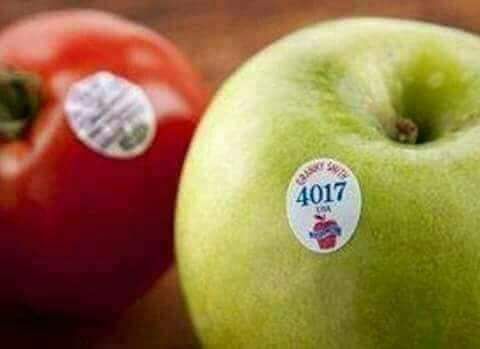
لماذا يتم وضع ملصقات صغيرة على الفواكه والخضروات ، fruit label numbers ! - منتديات درر العراق
How To Read Food and Beverage Labels - National Institute on Aging At the top of the Nutrition Facts label, you will find the total number of servings in the container and the food or beverage's serving size. The serving size on the label is based on the amount of food that people may typically eat at one time and is not a recommendation of how much to eat. Read more about serving and portion sizes.

El Turó speaks English » food
NPK Ratio: What Do Numbers on Fertilizers Mean - Almanac.com On the label, you'll see numbers like 5-10-10, 10-10-10, and 10-6-4. For example, a 100-pound bag of 10-10-10 contains ten pounds each of nitrogen, phosphorus, and potassium. The rest is filler, which gives it bulk and makes it easier to spread. Nitrogen (N) is needed for leaf growth and is responsible for making plants greener.

joojoo: Fruit labels
Understanding the USDA Organic Label Amidst nutrition facts, ingredient lists, and dietary claims on food packages, "organic" might appear as one more piece of information to decipher when shopping for products. Understanding what the organic label means can help shoppers make informed purchasing choices. Organic is a labeling term found on products that have been produced using cultural, biological, and mechanical practices ...
Four Yellow Labels Different Sorts Fruit Stock Vector (Royalty Free) 58072231 - Shutterstock
What Are the 3 Fertilizer Numbers and How to Understand Them The first number is for nitrogen (N), which increases leaf production. The second is for phosphorus (P), which promotes fruiting and flowering, and the third is for potassium (K), which promotes hardiness and is essential to the metabolic process. These three elements are critical in supporting any plant's health.

All sizes | Fruit Labels | Flickr - Photo Sharing!
Does It Matter if I Eat the Stickers on Fruits and Vegetables? In the United States, about half of fresh produce doesn't arrive in packaging, so the sticker is the main source of information on what type of produce it is and how it was grown. (Stickers that...

Fruit Labels... How to Pick the RIGHT Produce for your Health - Fitness/Exercise
How to Read a Nutrition Label, According to Dietitians - Shape When you're figuring out how to read a nutrition label properly, you'll need to first reference the food's serving size — typically listed in cups or pieces and the number of grams — and the number of servings in a package (aka servings per container). You might think the serving size on a nutrition label is the amount of that particular ...

Which Plastics Are Recyclable by Number? | The Old Farmer's Almanac It gets complicated because every local recycling facility collects different types of plastics and you need to contact your recycle to know which plastics get collected. Bottom-line, there are seven types of plastics. Generally, most recyclers accept plastics #1 and #2. Plastics #3 to #6 are more difficult to recycle and some recycling centers ...

31 Fruit Label Meaning - Labels Information List
Food Labeling & Nutrition | FDA Food labeling is required for most prepared foods, such as breads, cereals, canned and frozen foods, snacks, desserts, drinks, etc. Nutrition labeling for raw produce (fruits and vegetables) and ...

Pin by Pat Gilsbach on Decorating Ideas | Labels wall, Fruit labels, Wall art
What Do the Numbers on Those Tiny Produce Stickers Tell Us? Just type in the code from a sticker on a piece of fruit, and it will tell you that 3114, for example, signifies an extra-large green mango, botanical name Magnifera indica, belonging to the Keitt or Francis varieties of that fruit.

All sizes | Fruit Labels | Flickr - Photo Sharing!
How to Read Nutrition Facts Label - Food Network This carries over to all the other nutrients on the label. If 1 serving of a food has 120 mg of sodium, it can technically be labeled as a "low sodium" food. However, if you eat 3 servings, triple...

Fruit: label by saying - Interactive worksheet

Fruit Labels Stock Vector Illustration 15797806 : Shutterstock

Fruits Label

Here's the Meaning of the PLU codes on Fruits and Veggies

Baloo's non-political cartoon blog: Math cartoon
Post a Comment for "45 meaning of numbers on fruit labels"